
Northern Circuit · UNESCO World Heritage
The World's Largest Intact Caldera
The Ngorongoro Crater is the collapsed cone of a giant volcano — a natural amphitheatre roughly 260 km² across, with walls rising some 600 metres above a grassy floor. This self-contained Eden shelters an estimated 25,000 large animals, making it one of the most reliable places in all of Africa to see the Big Five in a single day.
Lying within the wider Ngorongoro Conservation Area, the crater is unique in that Maasai herders still live alongside the wildlife, grazing their cattle on the highland slopes just as they have for generations.
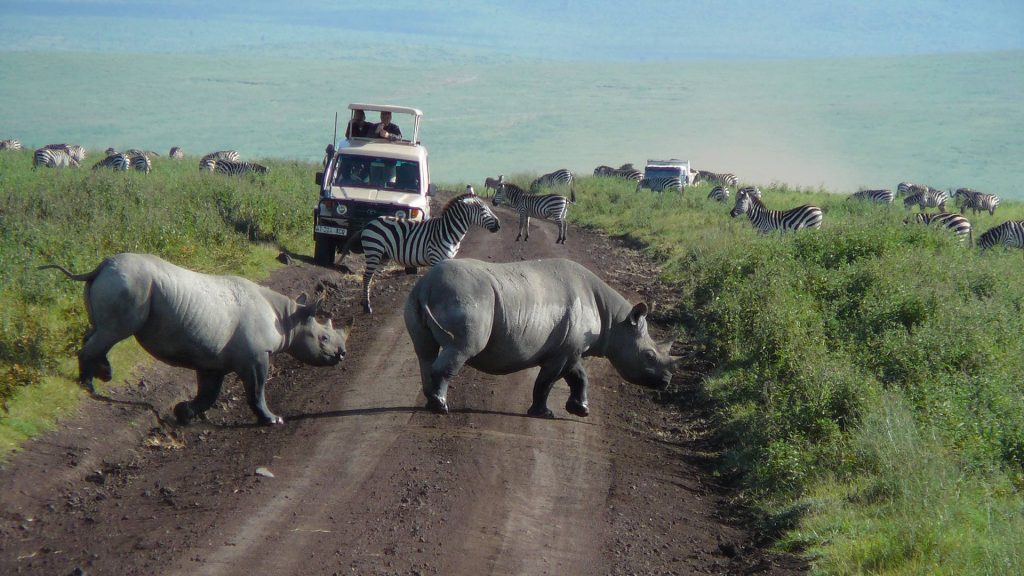
- See the Big Five — including endangered black rhino — often in one game drive
- One of the highest densities of lion anywhere in Africa
- Combine your visit with Maasai villages and Olduvai Gorge
- An easy, scenic drive from Arusha on the Northern Circuit
Good to Know
Ngorongoro at a Glance
Wildlife You May Spot
Best Time to Visit
Year-round. The dry season (June–October) offers the easiest game viewing; rhino are most active in the cool early morning.
Size & Depth
About 260 km² of crater floor, ringed by walls roughly 600 m high — the largest unbroken caldera on Earth.
Landscape
Open grassland, soda lake, swamp and acacia forest, all enclosed within the crater rim at around 2,300 m altitude.
Getting There
Roughly a 3–4 hour drive from Arusha, usually paired with Serengeti, Tarangire and Lake Manyara.
- Lion
- Black rhino
- Elephant
- Buffalo
- Leopard
- Hippo
- Hyena
- Wildebeest
- Zebra
- Flamingo
Things to Do
How You'll Explore
Most visits centre on a full-day game drive descending onto the crater floor at dawn, when predators are still active and the light is at its best. Away from the crater rim, the wider conservation area opens up walking and cultural experiences.
- Game-drive safaris on the crater floor
- Guided walking safaris in the highlands
- Maasai cultural visits & village walks
- Side trip to Olduvai Gorge, the "Cradle of Mankind"
Ready to Descend Into the Crater?
Tell us your dates and we’ll build a Northern Circuit safari around Ngorongoro, the Serengeti and more.